

Grant Policy
The charitable objects of the Trust are to pay the income and, in so far as the Trustees think fit, the capital to such charitable bodies or for such purposes as shall be exclusively charitable as the Trustees may from time to time decide.
Please note that the Trust does not fund individuals or expeditions.
Grants are awarded twice a year and the total level of grants annually is approximately £80,000. Grants are generally made as single payments between £1,000 and £5,000.
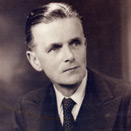
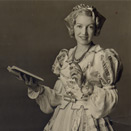
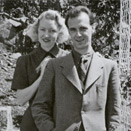
The existing policy clearly identifies Northern Ireland and South Africa as geographical areas of interest with UK grants otherwise tending to be London-centric. The grants in Northern Ireland are not restricted by particular categories but rather by the Trustees’ perception of need; this remains so in South Africa as well where many of the grants still reflect the particular interests of Lord, and particularly, Lady Lurgan. In the U.K. the grants have a bias towards
- Music and arts education and participation
- Deafness and other disabilities
- The elderly
- Medical relief including hospice support, and
- Medical research
and reflect the charitable objects stated in the Original Trust Deed.
South Africa grants
Applications are accepted for our South Africa grants programme once a year for our May deadline only. Please email Talita Laubscher at Bowman Gilfillan LLP first, to check your eligibility: talita.laubscher@bowmanslaw.com
Please note that we will not consider applications that have not been recommended by Talita.
Music
The annual Lurgan Junior Ballet Bursary was awarded in perpetuity to the Durban Dance Foundation in the 1970s and is still contested annually at the National Creative Arts Youth Festival. The Lurgan Opera Bursary's first recipient was Stella Beder, whom Lord and Lady Lurgan both coached in various operatic and oratorio roles. In 2008 the Trust decided to augment the Durban Dance Foundation's Lurgan Junior Ballet Bursary set up by Lady Lurgan.
The Lord and Lady Lurgan Junior Fellowship
The Lord and Lady Lurgan Trust funds a junior fellowship in piano accompaniment at the Royal College of Music. The current recipient of the scholarship is Bradley Wood
The Trust receives more applications than it has funds to support. In many cases it may not be possible to make grants for projects within the funding priorities.
Previous Recipients of the Junior Fellowship
2021-22
Bradley Wood, piano
Website: rcm.ac.uk
2020-21
Bradley Wood, piano
Website: rcm.ac.uk
2019/20
Dylan Perez, piano
Website: dylanjohnperez.com
2018/19
Hamish Brown, piano
Website: hamishbrown.org
2017/18
John Cuthbert, piano
Twitter: @Cuthbertpiano
2016/17
John Cuthbert, piano
2014/16
Chad Vindin, piano
Website: chadvindin.com
2013/14
Ian Tindale, piano
Website: iantindale.com
2010-13
David Smith, piano
Website: davidsmith.pianoaccompanists.com
2008-10
Joseph Middleton, piano
Website: www.josephmiddleton.com
2006-08
Vasco Hexel, composer
Website: www.vascohexel.com/Welcome.html
2005/06
O Duo, percussion duo
Website: oduo.co.uk
2004/05
The Thorne Trio, wind trio
Website: thethornetrio.co.uk
2002-04
Bronte String Quartet
Website: www.arcpublications.co.uk/ymf/perform/bronte.htm
2000-02
Christian Immler, baritone
Website: www.christianimmler.com/biog.html
1999/00
Grant Doyle, baritone
Website: www.grantdoyle.com